

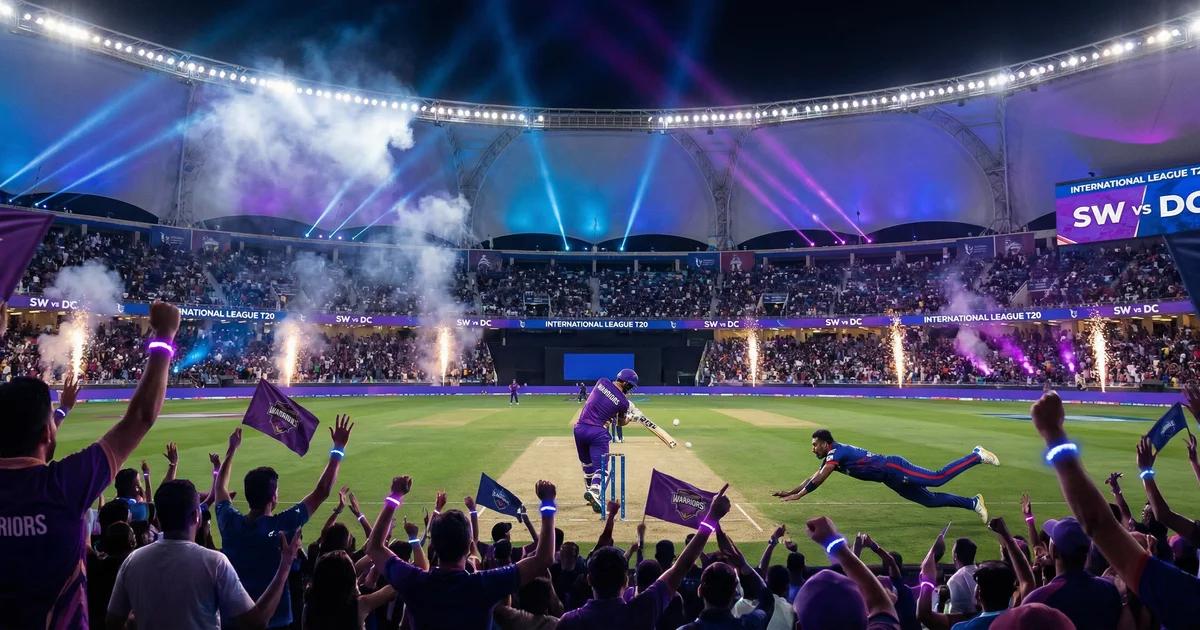
Cricket has successful domestic leagues on several continents, globally recognised franchises and players who move between competitions throughout the year. On paper, bringing the strongest club teams together for a world championship seems like an obvious next step. In practice, the idea has run into the problem that now shapes almost every major decision in the sport: there is barely any empty space left on the calendar.
Plans for a World Club Championship have reportedly been pushed back until at least 2031 after India, England and Australia resisted adding another major competition to the schedule. The proposal had been discussed alongside other possibilities for expanding multi-team cricket, including four-nation T20 events, but a recent cricket operations workshop in Dubai ended without an additional tournament being put forward. That leaves the next Future Tours Programme cycle, covering 2027 to 2031, with little room for the kind of structural change a new global club event would require.
The decision does not necessarily kill the concept. It does, however, reveal how difficult it has become to add anything to international cricket without first deciding what should be removed.
What Would a World Club Championship Actually Be?
The basic idea is easy to understand. Instead of national sides qualifying for a global competition, successful teams from major domestic franchise leagues would meet in an international tournament. Champions or leading teams from competitions such as the IPL, Big Bash League, SA20 and other established T20 leagues could theoretically compete for a world club title.
Cricket has tried something similar before. The Champions League Twenty20 brought together domestic T20 teams from different countries between 2009 and 2014, but the competition struggled to build a sustainable commercial identity and was eventually discontinued. The cricket landscape of 2026 is very different, however. Franchise leagues are more established, team brands travel more effectively across borders and many leading players now spend substantial parts of the year moving between short-format competitions.
That makes the concept more attractive than it was a decade ago, but it also makes scheduling considerably harder. The growth that creates demand for a world club tournament is the same growth that has filled the calendar with competing leagues.
| Part of the calendar | What it needs space for | Why adding another event is difficult |
|---|---|---|
| ICC tournaments | World Cups and Champions Trophy | Protected global windows already occupy major periods |
| Bilateral cricket | Tests, ODIs and T20Is | Boards rely on valuable international series |
| Franchise leagues | IPL, BBL, SA20 and other competitions | Increasingly important to players and broadcasters |
| World Test Championship | Test series with championship context | Long series require substantial blocks of time |
| Proposed club championship | Leading franchise teams from multiple leagues | Would need players and a dedicated global window |
The challenge, then, is not designing a tournament bracket. It is finding a period when the best teams can actually bring their best players.
Why India, England and Australia Said No
The reported objection from the three most commercially powerful cricket boards is primarily about capacity. Their schedules already contain major bilateral commitments, ICC tournaments and domestic competitions, and many arrangements for the 2027–2031 cycle have effectively been mapped out. A new event would have to fit around those commitments or force something else to move.
This matters because a World Club Championship without leading Indian, English or Australian involvement would immediately lose much of its commercial appeal. The IPL is the largest franchise competition in the game, while England and Australia combine valuable domestic products with some of international cricket’s most commercially important bilateral series. A global club tournament needs cooperation from those markets rather than simply a free week somewhere on the calendar.
There is also a broader question of control. National boards organise domestic leagues, the ICC manages global international tournaments, broadcasters purchase rights across different packages and players increasingly have contracts with several teams. A world club event sits directly at the intersection of those interests. Deciding when it takes place is only the beginning; organisers would also have to establish qualification, player eligibility, revenue distribution and the relationship between the event and existing leagues.
The Same Player Can Be Needed in Several Places
Player availability is one of the most complicated parts of the idea. Modern T20 cricketers can represent a national side while also holding contracts with franchises in multiple countries. A successful global club competition would inevitably bring some of those obligations into conflict.
Imagine a player whose franchise qualifies for a world championship while his national team has an international series during the same period. Which commitment takes priority? The problem becomes even more complicated if a player has represented different franchise organisations during the qualification period.
A workable championship would therefore need clear rules covering several questions:
- how clubs qualify from domestic leagues;
- which roster is eligible for the global event;
- what happens when international fixtures overlap;
- whether national duty always takes priority;
- how replacement players are handled;
- and how revenue is shared between the ICC, leagues, clubs and boards.
These are not small administrative details. They determine whether supporters would see genuine championship teams or weakened squads assembled around whoever happens to be available.
Cricket’s Calendar Problem Is Bigger Than One Tournament
The World Club Championship debate is really part of a much larger argument about how much cricket the sport can sustain. International cricket still operates across Tests, ODIs and T20Is, while ICC events create another layer of fixtures. Franchise leagues then compete for many of the same players, broadcasters and calendar windows.
Simply adding competitions eventually stops working. A player cannot be in two countries at once, and supporters have limited time to follow overlapping tournaments. Broadcasters also need events to feel important; scarcity can be commercially valuable, while an endless sequence of supposedly major matches risks reducing the significance of each one.
This explains why the lack of room before 2031 is more important than the fate of a single proposal. If cricket wants a global club championship in the next cycle, the sport may eventually have to make harder choices about bilateral series, protected franchise windows or the frequency of other tournaments. Moving dates around will only solve so much.
The ICC has already acknowledged the growing importance of franchise cricket in its governance structure. A Franchise Leagues Committee was established in 2026, giving the relationship between domestic leagues and the international game a more formal place in discussions. That does not guarantee a world club event, but it suggests that franchise cricket can no longer be treated as a side issue when the global calendar is planned.
Why the Old Champions League T20 Still Matters
Any attempt to revive the concept will inevitably be compared with the Champions League Twenty20. That tournament demonstrated both the appeal and the weaknesses of putting domestic champions into an international club competition.
One difficulty was identity. International cricket already had World Cups that supporters immediately understood, while domestic leagues had strong local contexts and familiar rivalries. A club championship had to persuade audiences that a contest between franchises from different competitions carried comparable meaning.
The environment has changed since then. Franchise brands are more recognisable internationally, streaming has made overseas competitions easier to follow and players regularly appear in several leagues. Fans are therefore much more familiar with the idea that elite T20 cricket operates as an interconnected global ecosystem.
Yet that familiarity creates another problem. If the same star appears for several franchises during a year, club identity can become less stable than it is in football. A future championship would need qualification and eligibility rules strong enough to make the tournament feel like a contest between genuine teams rather than a short-term gathering of available players.
Could a World Club Championship Still Happen After 2031?
Nothing about the latest development makes the idea impossible. Delaying it until after the next Future Tours Programme cycle could actually give cricket more time to solve the questions that made an immediate launch unrealistic.
A future calendar could contain designated franchise windows, clearer separation between formats or fewer overlapping bilateral series. The commercial position of individual leagues may also look different by 2031. Some competitions will probably become stronger, others may consolidate, and new markets could produce clubs capable of qualifying for a genuinely global event.
There is also a strong sporting argument for the concept. Domestic leagues currently crown champions within their own ecosystems but provide no definitive way to compare the strongest teams internationally. A successful club championship could create rare matchups that ordinary franchise seasons cannot offer and give smaller leagues a route onto a larger stage.
The key word is successful. Adding another trophy because global club competition sounds attractive would not be enough. The event would need a clear place in the calendar, reliable access to elite players and qualification rules that supporters can understand without studying contractual arrangements.
Cricket May Need Fewer Collisions Before It Gets More Competitions
The delay of the World Club Championship is a useful reminder that cricket’s expansion has reached a new phase. For years, growth largely meant adding more matches, more leagues and more tournaments. The next challenge is making those pieces coexist without weakening one another.
A global competition between leading franchise teams remains an appealing idea, perhaps more appealing now than when the Champions League T20 was operating. But the modern cricket calendar is also far less forgiving. International series, global events and domestic leagues are competing for the same weeks and, increasingly, the same elite players.
That is why 2031 matters. It provides a natural point at which another Future Tours Programme can be designed with different priorities rather than forcing a new tournament into commitments that already exist. If a World Club Championship eventually arrives, its success may depend less on inventing an exciting format than on cricket finally deciding what deserves protected space in a crowded global season.