

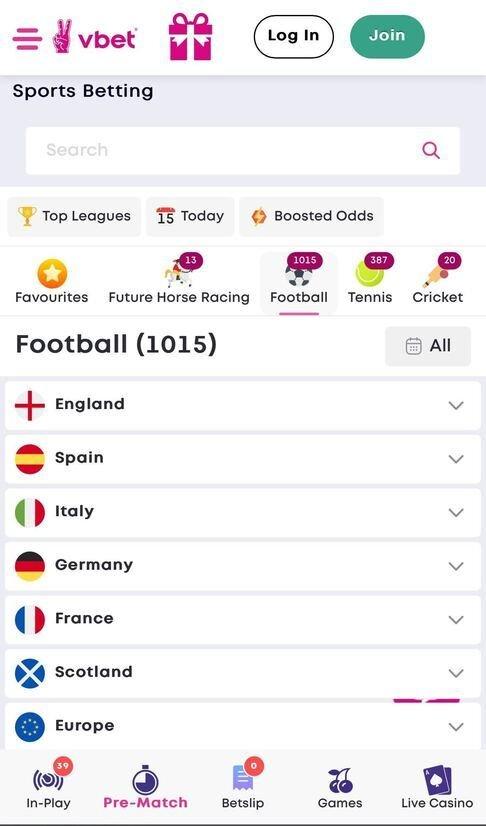
A sportsbook can offer hundreds of betting options for a single major event, but having more markets does not automatically make the experience better. As betting menus grow, the challenge increasingly shifts from availability to discovery. Users need to find the market they want without opening a long sequence of categories or scrolling through dozens of selections that are irrelevant to them.
This is why search, filtering and clearer market organization are becoming more important parts of betting platform design. These tools do not change the underlying odds or create new types of wagers. Instead, they make large market catalogues easier to navigate, particularly on mobile devices where screen space is limited.
More Markets Create a Navigation Problem
Traditional sportsbooks could organize an event around a relatively small number of familiar options such as match winner, totals and handicaps. Modern platforms may also include player markets, team statistics, period-specific selections, bet builders and dozens of alternative lines.
Cricket demonstrates the problem particularly well. A major match can include markets covering the match result, top batter, player runs, wickets, boundaries, innings totals, partnerships and individual overs. Someone looking for one specific player market should not have to inspect every section manually.
The same problem appears in football, basketball and tennis. Greater market depth gives users more choice, but it also makes the interface harder to scan. Once a sportsbook reaches this level of complexity, navigation becomes almost as important as the size of the market catalogue itself.
Search Can Provide a Shortcut to Specific Markets
A search field changes the way users approach a large event page. Instead of knowing which category contains a selection, they can begin with what they already remember: a player name, team, market type or statistical term.
Someone looking for a particular cricket batter, for example, may search the player’s surname rather than opening several player-prop categories. A football user could search for “corners” and immediately narrow the page to relevant markets. This reduces the number of steps between arriving at an event and finding the intended selection.
Search becomes particularly useful when terminology remains consistent. If the platform uses predictable names for common markets, users can quickly learn which words produce useful results. Poor naming has the opposite effect because a search system cannot help much when similar markets are described inconsistently across competitions.
Filters Solve a Different Problem
Search works best when the user already knows roughly what they want. Filters are more useful when someone wants to browse a smaller group of related options. Rather than entering a specific phrase, the user can reduce a large market catalogue according to its structure.
| Filter | What it can help display |
|---|---|
| Popular | Frequently viewed markets |
| Player markets | Individual performance selections |
| Totals | Points, goals, runs or other totals |
| Period markets | Innings, halves, quarters or sets |
| Team markets | Team-specific outcomes and statistics |
| Live | Markets currently available in-play |
These categories need to remain simple enough to understand quickly. Adding too many filters can reproduce the same problem they are supposed to solve. The goal is not to expose every internal market classification but to provide a few useful ways of reducing what appears on screen.
Mobile Betting Makes Market Discovery More Important
Desktop interfaces have enough space for sidebars, expanded categories and multiple columns. A smartphone does not. Large betting catalogues therefore create a stronger usability problem on mobile because only a small portion of the available information can be visible at one time.
Collapsible groups help, but they still require users to know where a market is located. Search and filters provide another route. A compact row of categories can reduce hundreds of selections to a manageable list without permanently occupying most of the screen.
This also reduces excessive scrolling. Long event pages can make users lose their position, especially when categories expand and collapse dynamically. Keeping navigation controls accessible allows them to move between market groups without repeatedly returning to the top of the page.
Good Organization Needs to Work During Live Betting
Market discovery becomes more complicated after an event begins. Some pre-match selections disappear, new live markets become available and existing prices update as the game develops. A static menu can quickly become difficult to navigate if it does not reflect those changes.
Live interfaces can prioritize markets that are currently relevant while still allowing users to search for something specific. In cricket, the focus may shift between innings-level markets and selections connected to the current batter or over. In football, next-goal, cards or corners markets may become more prominent depending on what is happening in the match.
This does not mean the platform should constantly reorganize everything on screen. Excessive movement can make navigation harder. A better approach is to keep the overall structure stable while clearly indicating which categories contain active markets.
Search Results Need Enough Context
Finding a market is only useful if the result is understandable. A search for a player name might return several selections connected to runs, boundaries or other statistics. Showing only the player and current odds would force the user to open each result to understand what it represents.
Useful results therefore need enough context to distinguish similar selections. This might include the market name, relevant period and participant alongside the available price.
For example, three results involving the same cricket player could refer to total runs, number of boundaries and top batter. They share the same participant but represent completely different conditions. Clear labels help prevent fast navigation from creating a new source of confusion.
Favorites Can Complement Search and Filters
Search helps users locate something now, while favorites can reduce navigation during future visits. A bettor who regularly follows a particular competition, team or market category may benefit from keeping it easier to access.
This can be particularly useful on platforms covering many sports. A user interested primarily in cricket should not necessarily have to navigate through football, basketball and tennis content every time the sportsbook opens.
Favorites should still remain optional rather than completely reshaping the interface. Users’ interests change, and major sporting events can temporarily shift attention toward competitions they do not normally follow. The strongest systems provide shortcuts without making the wider catalogue difficult to reach.
Better Discovery Makes Large Sportsbooks Feel Smaller
Modern betting platforms are unlikely to reverse the expansion of market choice. Major events will continue to contain large numbers of selections, especially as player markets and live betting become more detailed. The more useful question is how to prevent that depth from turning into clutter.
Search, filters and well-designed categories provide a practical answer. They allow a sportsbook to maintain a large catalogue while showing each user only a manageable portion of it at one time. The underlying product can remain complex without forcing every visitor to navigate that complexity manually.
This makes market discovery a significant part of sportsbook usability. A platform may offer exactly the selection a user wants, but that advantage has little value if finding it requires several minutes of scrolling. As betting menus continue to expand, helping users reach the right market quickly is becoming just as important as adding another one.