

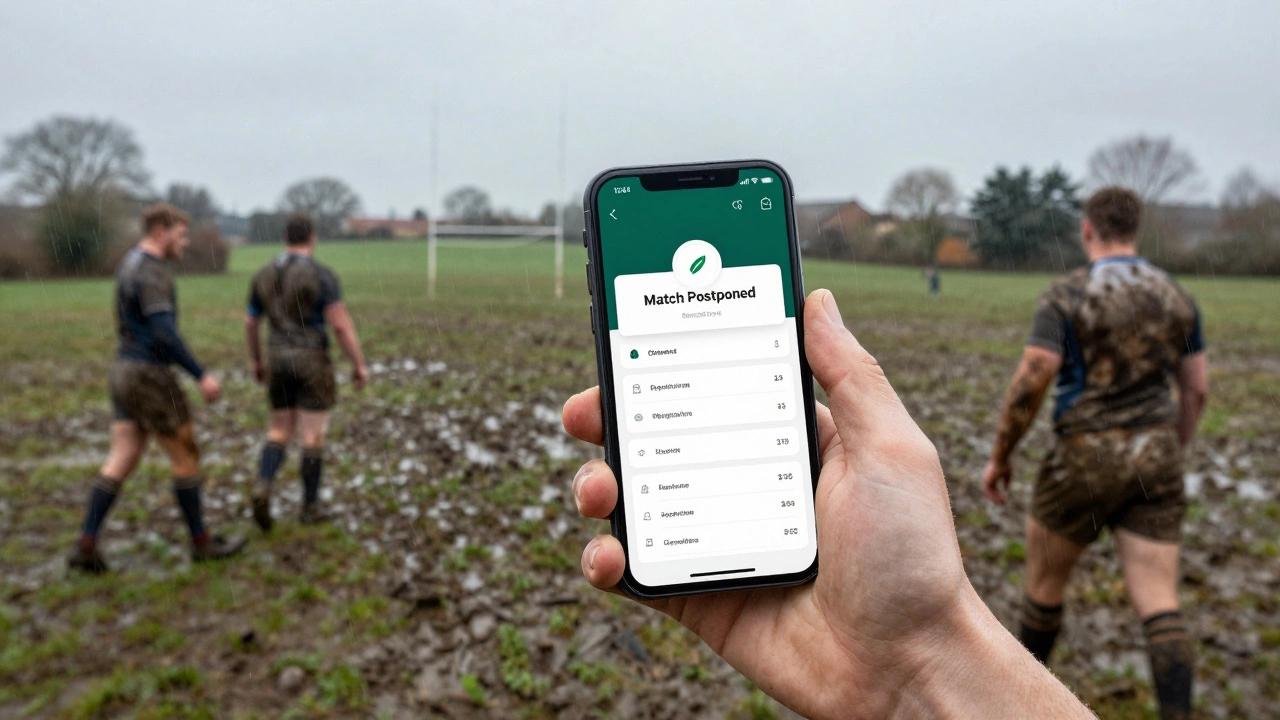
A match does not always follow the schedule displayed when a bet is placed. Rain can stop cricket for several hours, a football fixture may be postponed before kick-off, tennis can move to another day, and technical or safety problems can interrupt almost any sporting event. For a bettor, the immediate question is rarely just why the match stopped. The more practical concern is what the interruption means for an existing wager and whether the event is expected to continue.
Betting platforms have traditionally answered that question through their rules pages, but forcing users to search through several sections of terms during an interrupted match creates unnecessary confusion. A clearer approach is to bring event status, scheduling information and relevant betting rules closer together. This does not change how wagers are settled, but it makes the period between an interruption and a final decision considerably easier to understand.
Postponed, suspended and abandoned do not mean the same thing
Sports terminology can create confusion because several status labels describe events that are no longer proceeding normally. A postponed match usually has not started at its originally scheduled time and may receive a new date. A suspended or interrupted match has normally started but has temporarily stopped, while an abandoned event may not be completed under the original conditions.
Those differences matter because betting rules can treat each situation differently. The outcome may depend on the sport, market, amount of the event already completed and whether play resumes within a period specified by the operator. A user who sees only “Match stopped” receives almost none of the information needed to understand what may happen next.
Clear status labels provide a better starting point. They do not need to predict the eventual settlement while officials are still deciding what happens to the event, but they can accurately describe the current situation. That distinction prevents an uncertain sporting situation from looking like a technical failure on the betting platform.
Cricket shows why interruption information matters
Few sports demonstrate the problem better than cricket. Weather can delay the toss, interrupt an innings, shorten a match or force play to continue later depending on the competition and format. A user following several markets at once may therefore see betting activity change while the underlying sporting event is still unresolved.
Simply removing live markets during a rain delay gives very little context. Someone arriving at the event page may not know whether the match has finished, whether the data feed has failed or whether betting has temporarily paused. A visible status such as “Rain delay — play temporarily stopped” communicates the situation immediately without making any promise about when play will resume.
The situation becomes more complicated when playing conditions change. A shortened cricket match, for example, can affect the relevance of markets tied to innings totals, player performance or other conditions. The precise settlement depends on the operator’s rules, so the interface should avoid guessing. What it can do is show that the match conditions have changed and direct users toward the rule applying to the affected market.
Event status and market status should be separated
One useful improvement is to distinguish what is happening to the sporting event from what is happening to an individual betting market. These two states are related, but they are not identical. A match may be temporarily interrupted while some pre-match or outright markets remain visible, or a specific market may already be closed even though the sporting event later resumes.
Presenting both statuses removes ambiguity. Instead of one generic label covering everything, the event page can explain the sporting situation while the bet slip or account history shows the current state of the wager.
| Sporting situation | Event status | Possible market message |
|---|---|---|
| Kick-off moved to later date | Postponed | Markets unavailable pending new schedule |
| Rain stops cricket | Interrupted | Live markets temporarily paused |
| Tennis resumes next day | Suspended | Existing bets remain pending under event rules |
| Event officially cancelled | Cancelled | Settlement determined under cancellation rules |
| Match ends before completion | Abandoned | Affected markets under review |
The wording will vary between platforms and sports. The important part is keeping the sporting status separate from the eventual betting decision.
A changed start time should be visible everywhere
Rescheduled events create another surprisingly common interface problem. The sportsbook may update the event page while an older start time remains visible inside saved selections, bet history, notifications or another section of the account. Users then encounter two different schedules for what appears to be the same fixture.
Betting platforms increasingly operate across many surfaces, so schedule changes need to propagate consistently. An updated event time should ideally appear wherever the fixture is referenced, with enough context to indicate that the original schedule changed. Quietly replacing one timestamp with another can be technically correct but still leave a user wondering whether they remembered the original time incorrectly.
A small “rescheduled” label solves much of that problem. If both the original and updated time are useful, the interface can display them together rather than erasing the history of the change. This becomes especially valuable when users have already placed wagers before the postponement.
Active bets need more context than upcoming markets
Someone browsing an event that has not yet started needs different information from someone who already has money attached to it. For the first user, the new date may be enough. For the second, the important question is whether the existing bet remains active.
This is where account history can become more useful. An active wager linked to a postponed event can carry the same event-status information shown on the main sports page, preventing the user from having to locate the fixture again. If settlement cannot yet be determined, the platform can say that clearly rather than leaving the bet under a generic “open” status with no explanation.
Useful messages might indicate that the event has been postponed, that the wager remains pending, or that settlement is awaiting confirmation under the relevant event rules. The language should describe the current state rather than promise an outcome before the necessary information is available.
Market-specific rules make simple answers difficult
A major challenge is that one event can contain dozens or hundreds of betting markets, and an interruption does not necessarily affect all of them in the same way. A market that has already been conclusively determined may be treated differently from one that depended on the remainder of the match. Sport-specific rules can add another layer.
This makes blanket messages risky. Saying “all bets will be void” immediately after an event is abandoned may be inaccurate if some markets have already produced a valid result under the operator’s rules. Saying only “event abandoned,” however, leaves users with the opposite problem: they know what happened to the match but not what it means for their wager.
The better solution is progressive information. First show the confirmed event status, then update individual bets as their settlement state becomes known. Where useful, the account can provide a direct path to the rule that applies rather than sending users to the beginning of a long general terms page.
Rule links are more useful when they open in context
Sportsbook rules can become extensive because they have to cover different sports, competitions, markets and exceptional situations. A user with an abandoned tennis match does not necessarily need to read rules covering football, cricket and basketball before finding the relevant section.
Contextual linking can shorten that journey. If a bet remains pending because a tennis match has been suspended, the interface can point directly toward the tennis abandonment or postponement rule. A cricket wager affected by rain can lead to the appropriate cricket section instead.
This does not require rewriting the full rules inside every bet record. In fact, displaying too much legal or operational text in a small mobile interface would make the situation harder to understand. A short explanation combined with a precise link provides both immediate clarity and access to the full conditions.
Notifications can prevent repeated checking
Postponed events create an unusual user behavior problem because there may be nothing for the bettor to do. The new start time has not been confirmed, settlement is still pending and refreshing the event page every few minutes cannot accelerate either process. Without updates, however, users may continue checking because they do not know when new information will appear.
Notifications can make this waiting period easier to manage. A platform might send an update when a new start time is confirmed, when an interrupted event resumes or when a wager connected to an abandoned match is finally settled. These messages should focus on confirmed changes rather than sending repeated alerts that simply restate that the situation remains unresolved.
The usefulness is particularly clear for events that move to another day. A bettor does not need to keep the sportsbook open overnight just to discover whether play will resume tomorrow. A well-timed update can bring the relevant information back to the user when something has actually changed.
Live betting makes accurate status changes harder
Pre-match postponements can sometimes be communicated before betting activity becomes intense. Interruptions during live events are more difficult because odds, statistics, event clocks and markets may all be updating when play suddenly stops. Different systems need to agree about what happened before the interface can present a reliable status.
This creates a short period where speed and accuracy compete. Updating too slowly can make the sportsbook appear behind the actual match, but publishing an incorrect reason for an interruption can create a different kind of confusion. The safest interface often separates confirmed information from information that is still being verified.
For example, the platform can immediately show that play has stopped without claiming to know why. Once the official event feed confirms a weather delay, injury interruption or another cause, the status can become more specific. Users receive fast information without speculation being presented as fact.
Data timestamps can make uncertainty easier to understand
A timestamp is a small interface element, but it becomes useful when an event is changing quickly. Showing when the status was last updated gives users some indication of how current the information is. This is particularly valuable during weather delays, scheduling changes or situations where official confirmation arrives gradually.
Imagine two messages: “Match postponed” and “Match postponed — status updated 14:32.” The second does not provide a new date, but it tells the user that the platform has recently processed an update. If nothing changes for several hours, the timestamp also makes clear that the displayed status is not necessarily a fresh announcement.
This type of transparency should remain subtle. Users do not need technical details about every data feed, but knowing when important information was updated can reduce uncertainty during unusual event conditions.
Mobile interfaces need especially concise status information
Most bettors checking a delayed match on a phone are unlikely to want a long explanation before they understand the basic situation. The first screen needs to answer a few immediate questions: Is the event still happening? Has the start time changed? Is my bet still active? Is there anything I need to do?
The interface can then reveal additional detail when requested. A compact status card might show the event state, updated schedule and wager state, followed by an expandable explanation or link to the applicable rules. This layered approach keeps the main screen readable without hiding information from users who need it.
Color can support these states, but wording should carry the meaning. Relying only on red, yellow or grey indicators creates accessibility problems and forces users to interpret what each color represents. “Postponed,” “awaiting new start time” and “bet pending” are much harder to misunderstand.
Different sports need different interruption logic
A universal event-status system is useful at the interface level, but the underlying logic cannot treat every sport identically. Cricket can lose overs to weather, tennis matches can continue on another day, football fixtures may be postponed before kick-off, and motorsport sessions can be delayed or shortened for safety reasons.
That means platforms need both consistency and sport-specific detail. Users should recognize familiar status labels across the sportsbook, while the information underneath those labels reflects the actual rules and structure of the sport.
A practical structure might look like this:
- Postponed: the event will not start at the original scheduled time.
- Delayed: the event is expected to start later but has not been formally rescheduled.
- Interrupted: play has started but temporarily stopped.
- Suspended: continuation is awaiting a later decision or time.
- Abandoned: the event ended without normal completion.
- Cancelled: the scheduled event will not take place.
Exact terminology can differ between sports data providers and operators, so consistency inside the platform matters more than trying to force every competition into identical wording.
Clear event status supports trust without predicting settlement
When something unusual happens in a sporting event, uncertainty is unavoidable. The sportsbook cannot announce a new date before organizers confirm one, and it cannot always settle every affected market immediately. Good interface design does not eliminate that uncertainty; it makes clear which parts are known and which are still pending.
This is an important distinction. A platform can say that a football match has been postponed without yet knowing the replacement date. It can confirm that a wager remains pending without promising whether it will eventually stand or be voided. Each update reduces one part of the uncertainty while avoiding claims that may later need to be reversed.
That approach is particularly useful during major weather events or competition disruptions where many fixtures can change together. Instead of leaving users to piece together information from sports news, bet history and a rules document, the betting platform can keep the relevant status attached to the event itself.
Event interruptions are part of the betting experience
Postponements and abandoned matches will never be the most visible feature of a sportsbook. Most events start and finish normally, which makes exceptional situations easy to treat as edge cases during interface design. Yet those are precisely the moments when users need more information because the normal betting flow has stopped working.
Clear event labels, synchronized schedule changes, contextual rules, account-level updates and useful notifications can turn a confusing interruption into a manageable process. None of these features changes the sporting event or guarantees a particular settlement result. They simply help users understand what has happened and what information is still missing.
As betting platforms become faster and more data-rich, handling unusual events well becomes part of the same broader push toward transparency. Showing odds and scores quickly matters when a match is running normally. Explaining what happens when the match suddenly stops matters just as much.