

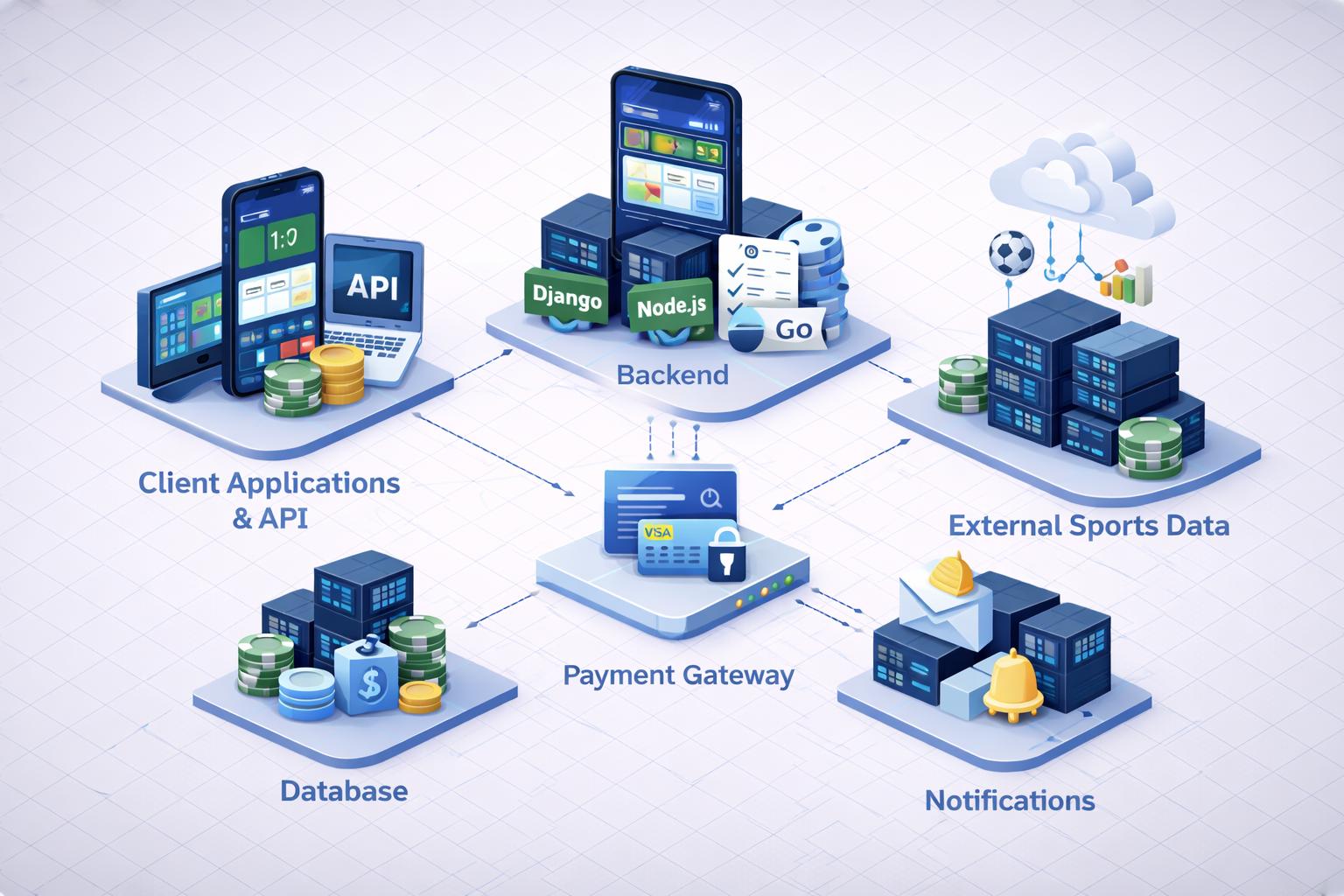
Two betting platforms can use similar underlying sportsbook technology and still look completely different to the user. One might emphasize live cricket, another may prioritize football, while a third could organize its home screen around local competitions and mobile shortcuts. Increasingly, that difference can be created without rebuilding the entire betting system underneath.
A recent sportsbook launch provides a useful example. In September 2026, Vyking introduced a sportsbook frontend built by its own product team using FIRST.bet’s SportOS infrastructure. Vyking controls what players see, including the mobile experience, market presentation and bet-slip behavior, while the underlying system handles functions such as pricing, trading, risk management, bet acceptance and settlement.
This separation between the visible sportsbook and the engine running behind it is an important development because it changes how quickly betting products can adapt without replacing their core infrastructure.
What Is a Sportsbook Frontend?
The frontend is the part of a betting platform the user actually interacts with.
It includes elements such as:
- the sportsbook home screen;
- event and competition pages;
- market menus;
- odds presentation;
- search and navigation;
- live-match interfaces;
- the bet slip;
- account-facing betting information;
- mobile layouts and controls.
The backend performs a different job. It can handle pricing, trading, event feeds, bet processing, settlement and other systems that do not need to be directly visible to the bettor.
Traditionally, these layers could be delivered together as a relatively fixed product. Separating them gives an operator more control over the visible experience without requiring it to recreate every sportsbook function behind the interface.
The Same Betting Engine Can Support Different Experiences
This distinction matters because sportsbooks do not necessarily serve identical audiences. A platform aimed at cricket-heavy markets may want international fixtures, major tournaments and live cricket information to occupy prominent positions. Another operator may have an audience primarily interested in football and organize the same screen very differently.
The underlying betting technology does not necessarily have to change in either case.
Consider a simplified structure:
| Layer | Typical responsibility |
|---|---|
| Frontend | Layout, navigation and user interactions |
| Market presentation | How events and selections appear |
| Bet slip | Stake entry and visible confirmation flow |
| Backend | Bet processing and sportsbook logic |
| Trading | Pricing and market management |
| Settlement | Processing completed wagers |
Separating these responsibilities allows the player-facing layer to change while much of the sportsbook machinery remains stable.
Mobile Design Is One Reason This Matters
Sportsbooks increasingly have to treat mobile as the primary interface rather than a reduced version of a desktop site. A smartphone creates strict limits on screen space. Large event lists, hundreds of markets, live statistics and a bet slip may all compete for attention on a relatively small display.
An operator controlling its own frontend can decide how those elements should behave for its particular audience. It might use compact competition navigation, change how market groups expand, move the bet slip to a different interaction pattern or reduce the amount of information shown before a user opens an event. These decisions do not change how the underlying wager is processed. They change how easily the user can reach it.
Cricket Shows Why One Interface Does Not Fit Every Sport
Cricket is particularly useful for understanding the problem. A cricket event is structured differently from a football match. It may contain innings, overs, individual batters and bowlers, partnerships, wickets and a wide variety of player markets.
Live information also follows a different rhythm. A football interface may organize much of the event around a running match clock, while cricket naturally revolves around deliveries and overs.
Trying to force both sports into exactly the same interface can make one of them unnecessarily difficult to read. A flexible frontend can give cricket-specific information more appropriate space without requiring the underlying betting engine to become cricket-specific.
Localization Can Go Beyond Translation
Localization is often treated as a language problem, but sportsbook interfaces can require much deeper adaptation. Different markets can have different popular sports, familiar odds formats, navigation expectations and competition priorities. Even terminology can vary.
A localized frontend can therefore change more than translated labels. It can determine which sports appear first, which competitions receive shortcuts, how event times are displayed and how much prominence particular market groups receive. The backend can continue performing the same core sportsbook functions while the frontend presents them in a way that better matches the intended audience.
Operators Can Change the Interface Faster
Owning more of the frontend can also change the development cycle. Imagine that an operator discovers users are struggling to locate player markets during a major cricket tournament. If the interface is tightly controlled by an external platform, making a meaningful change may depend on the provider’s product roadmap.
With greater frontend control, the operator may be able to redesign that navigation itself while leaving the underlying trading and settlement systems untouched.
The same applies to smaller changes. A team could test a new event card, reorganize market categories, adjust the bet-slip flow or simplify mobile navigation without replacing the sportsbook engine. This does not make development effortless. Frontend changes still need design, testing and quality control. But the responsibility becomes more clearly separated.
Frontend Freedom Still Needs Stable Data
A flexible interface is only useful when the information feeding it remains reliable. Odds need to correspond with the correct markets. Event status must remain synchronized. Suspended selections need to appear unavailable. Accepted wagers need to reach the backend correctly.
This creates an important boundary. The frontend can decide how information is presented, but it should not create ambiguity about what that information means.
A visually attractive market card is not useful if its selection names are unclear. A fast bet slip is not an improvement if the user cannot see which odds were accepted. A sophisticated live page can become confusing if its event data arrives out of sequence. Frontend flexibility therefore depends on a clear contract between presentation and underlying sportsbook systems.
APIs and Feeds Make the Separation Possible
The connection between frontend and backend is typically handled through structured data and technical interfaces. The player does not need to see this process.
When an event page loads, the frontend can request the competitions, markets, prices and statuses it needs. When a selection is added to the bet slip, the interface can pass the relevant information to the systems responsible for processing the wager. The visible interface and the sportsbook engine can therefore evolve at different speeds as long as the connection between them remains reliable.
This approach is familiar across modern software development, but its implications for sportsbooks are particularly noticeable because betting interfaces contain large amounts of fast-changing information.
Customization Does Not Automatically Mean Better UX
More control also introduces more responsibility. An operator that controls its frontend can make the interface better suited to its users, but it can also make poor design decisions.
Too many custom components can create inconsistency. Aggressive animations can distract from changing prices. Unusual navigation may make familiar markets harder to locate. A heavily customized bet slip may require users to relearn actions they already understand elsewhere.
Customization is therefore useful when it solves a real usability problem. The objective should not be to make every element look different simply because the technology allows it. Familiar patterns can be valuable when users already understand them.
Testing Can Become More Focused
Separating layers can also make experimentation more targeted. Suppose a platform wants to know whether users find cricket player markets more easily when they are displayed in a horizontal category bar instead of several collapsed sections. That is primarily a frontend question. The operator can compare interface approaches without changing how those markets are priced or settled.
Similar tests can examine:
- competition navigation;
- event-page organization;
- placement of live statistics;
- market grouping;
- bet-slip presentation;
- mobile menu behavior.
This allows product teams to focus on the visible problem rather than treating every interface adjustment as a sportsbook-wide technical change.
The Bet Slip Is Where Both Layers Meet
The bet slip is one of the clearest examples of why frontend and backend responsibilities need to work together. From the user’s perspective, the bet slip is an interface. It displays selections, odds, stake fields and potential returns. Behind that interface, however, the platform needs to confirm whether the selected market is still available, whether the price has changed and whether the wager can be accepted.
The frontend needs to communicate those backend responses clearly. If odds change, the user should understand what happened. If a selection becomes unavailable, the interface should not simply stop responding. If a wager is accepted, the confirmation should accurately reflect the transaction. The frontend can control the experience, but it cannot operate independently from the engine.
A Headless Approach Can Support Multiple Products
Once presentation is separated from sportsbook infrastructure, the same underlying technology can potentially support more than one visible product. An operator might build a full website, a mobile-focused interface or another specialized experience while connecting each to the same core systems.
That can reduce the need to reproduce complex sportsbook functionality every time a new customer-facing product is created. It also explains why frontend-less or headless sportsbook systems are attracting attention. The value is not that the backend disappears. The opposite is true: the backend becomes a specialized layer that can serve several experiences without dictating exactly what each one must look like.
The Sportsbook Is Becoming More Modular
For users, most of this architecture remains invisible. They simply see an event list, open a match, choose a market and interact with a bet slip.
Behind that simplicity, however, the structure of sportsbook technology is becoming more modular. The systems responsible for pricing and processing bets do not always need to control every pixel the player sees.
The September 2026 Vyking and FIRST.bet launch provides a current example of that model in practice: one company controls the player-facing frontend while sportsbook infrastructure operates underneath it.
That separation can give operators more freedom to adapt mobile layouts, navigation and market presentation to their audiences while retaining specialized systems for the complex work happening behind the screen. The important change is therefore not simply visual customization. It is the ability to change what the user sees without rebuilding everything the sportsbook needs in order to function.